Frozen foods preserve flavor and nutrition, but their quality depends heavily on the ice crystal structure formed during freezing—a hidden world revealed through microstructure imaging techniques.

🔬 The Hidden Architecture of Frozen Foods
When we think about frozen food quality, we often focus on taste, nutrition, and convenience. However, beneath the surface lies a complex microscopic world that determines everything from texture to shelf life. The way ice crystals form and distribute themselves within food matrices creates a microstructure that profoundly impacts the eating experience.
Microstructure imaging has revolutionized our understanding of frozen foods by allowing scientists and food technologists to peer into this invisible realm. These advanced techniques reveal how water molecules organize themselves during freezing, how cellular structures respond to temperature changes, and why some frozen products maintain their quality better than others.
The importance of understanding frozen texture extends far beyond academic curiosity. It directly impacts food manufacturers’ ability to optimize freezing processes, reduce freezer burn, minimize drip loss during thawing, and ultimately deliver products that consumers find appealing and satisfying.
❄️ Why Microstructure Matters in Frozen Foods
The microstructure of frozen foods serves as the blueprint for quality attributes that consumers experience. When food freezes, water within the cellular matrix transforms into ice crystals. The size, shape, and distribution of these crystals determine whether a strawberry retains its firmness after thawing or turns mushy, whether ice cream feels smooth or gritty on the tongue, and whether frozen meat loses excessive moisture during cooking.
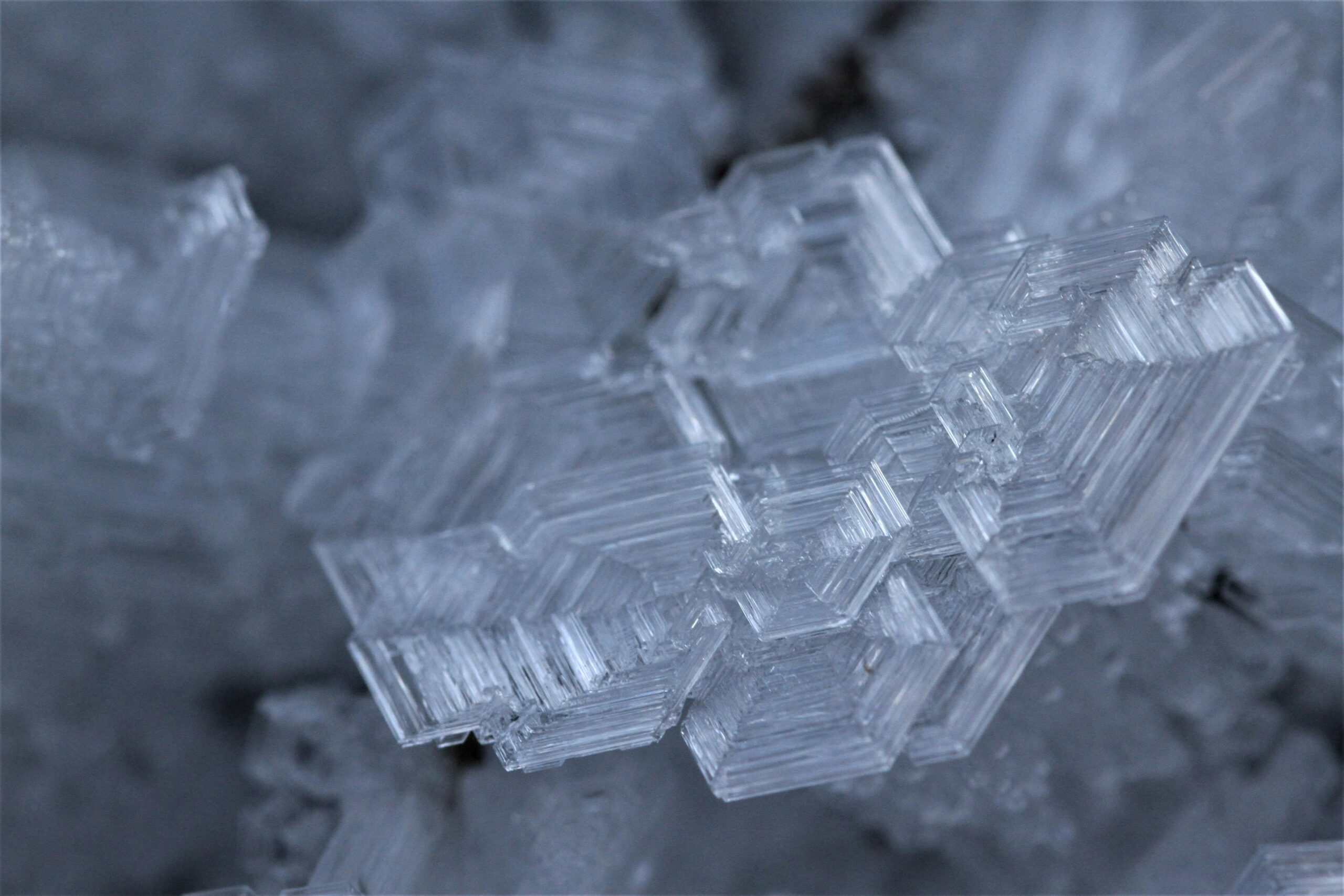
Large ice crystals typically form during slow freezing processes. These crystals can puncture cell walls, leading to structural damage that becomes apparent upon thawing. The result is a loss of texture integrity, increased drip loss, and diminished sensory appeal. Conversely, rapid freezing produces smaller ice crystals that cause less cellular disruption and better preserve the original texture.
Understanding this relationship between freezing conditions and microstructure empowers food producers to engineer better products. By visualizing the actual crystal formations and cellular arrangements, researchers can fine-tune freezing protocols, adjust formulations, and develop innovative preservation technologies.
The Science Behind Ice Crystal Formation
Ice crystal formation follows predictable physical principles, yet the complexity of food matrices creates unique challenges. Foods contain not just water but also proteins, carbohydrates, lipids, and various solutes that interact with ice formation. These components influence nucleation sites, crystal growth rates, and the final microstructure.
During freezing, water molecules must first overcome an energy barrier to form stable ice nuclei—a process called nucleation. Once nuclei form, they grow by attracting additional water molecules. The rate of growth depends on temperature gradients, the presence of dissolved substances, and the physical constraints imposed by the food matrix.
Controlling this process requires precise understanding of what happens at the microscopic level, which is exactly what microstructure imaging provides.
🔍 Advanced Imaging Technologies Revealing Frozen Secrets
Several sophisticated imaging techniques have emerged as essential tools for studying frozen food microstructure. Each method offers unique advantages and reveals different aspects of the frozen architecture.
Scanning Electron Microscopy (SEM)
Scanning electron microscopy provides incredibly detailed images of frozen food surfaces at magnifications ranging from 20X to over 100,000X. This technique requires specialized sample preparation, including freezing samples in liquid nitrogen to preserve their structure, followed by sublimation of surface ice to reveal the underlying matrix.
SEM excels at showing the three-dimensional topology of ice crystals and food components. Researchers can observe individual crystal facets, measure crystal sizes, and assess the spatial relationships between ice and cellular structures. The high depth of field characteristic of SEM images makes them particularly valuable for understanding complex surface features.
Confocal Laser Scanning Microscopy (CLSM)
Confocal microscopy offers the advantage of examining internal structures without extensive sample preparation. By using fluorescent dyes that selectively bind to proteins, lipids, or other components, researchers can create detailed maps of how these substances distribute within frozen foods.
This technique proves especially valuable for studying emulsion-based frozen products like ice cream, where the distribution of fat globules, air cells, and ice crystals determines texture and stability. CLSM can capture optical sections at different depths, which can be reconstructed into three-dimensional models.
X-ray Computed Tomography (CT)
X-ray CT scanning provides non-destructive, three-dimensional visualization of frozen food microstructure. This technology, similar to medical CT scans, creates cross-sectional images that reveal internal structures without cutting or otherwise damaging samples.
The non-invasive nature of X-ray CT makes it ideal for tracking structural changes over time, such as ice crystal growth during storage or the formation of freezer burn. Advanced synchrotron-based X-ray systems can achieve resolution sufficient to visualize individual ice crystals and pore networks.
Magnetic Resonance Imaging (MRI)
MRI techniques adapted for food science applications can distinguish between different phases of water—frozen, bound, and free—within food matrices. This capability provides insights into how water mobility changes during freezing and storage, which directly relates to texture and stability.
Time-domain nuclear magnetic resonance (TD-NMR) offers a faster alternative for measuring water distribution and mobility, making it practical for quality control applications in production environments.
🍓 Real-World Applications Across Food Categories
Different food categories present unique microstructural challenges that require tailored imaging approaches and processing strategies.
Frozen Fruits and Vegetables
Plant-based foods contain high water content within cellular compartments bounded by cell walls. The integrity of these cells largely determines post-thaw texture quality. Microstructure imaging reveals how different freezing rates affect cell wall damage and the location of ice crystal formation.
Studies using electron microscopy have shown that blanching before freezing can help preserve texture by inactivating enzymes and slightly plasticizing cell walls, allowing them to better withstand ice crystal pressure. Imaging also helps optimize individual quick freezing (IQF) processes that maintain fruit and vegetable quality.
Frozen Meat and Seafood
Muscle tissue contains organized protein structures that can be severely disrupted by improper freezing. Microstructure imaging helps visualize how ice crystals form within muscle fibers and between cells, affecting drip loss, tenderness, and water-holding capacity.
Research using confocal microscopy has demonstrated that certain marinade ingredients can modify ice crystal formation patterns, potentially improving frozen meat quality. Understanding these microstructural changes allows processors to develop better freezing protocols specific to different cuts and species.
Ice Cream and Frozen Desserts
Ice cream represents one of the most complex frozen food systems, containing ice crystals, air bubbles, fat globules, and an unfrozen serum phase. The sensory perception of smoothness depends on ice crystal size remaining below approximately 50 micrometers.
Microstructure imaging has revealed how stabilizers and emulsifiers affect ice crystal size distribution and how temperature fluctuations during storage cause crystals to grow through recrystallization. This knowledge drives formulation improvements and guides storage recommendations.
Frozen Doughs and Baked Goods
Yeast viability and gluten network integrity determine whether frozen doughs perform adequately after thawing. Imaging techniques show how ice crystals disrupt gluten strands and how cryoprotectants can minimize this damage.
Researchers have used microscopy to optimize freezing protocols that maintain yeast cell membrane integrity while preventing large ice crystal formation in the dough matrix. These insights have led to frozen dough products with improved baking performance.
📊 Quantifying Microstructure for Quality Control
Beyond visual assessment, microstructure imaging enables quantitative analysis that can be correlated with quality attributes and sensory properties.
Image analysis software can automatically measure parameters such as:
- Mean ice crystal size and size distribution
- Crystal shape factors (roundness, aspect ratio)
- Porosity and pore size distribution
- Phase volume fractions
- Spatial distribution patterns
- Surface area and tortuosity
These quantitative metrics provide objective measures that can be tracked during product development, used for quality control specifications, and correlated with consumer acceptance scores. Statistical process control based on microstructural parameters helps manufacturers maintain consistent quality across production batches.
🌡️ Temperature Fluctuations and Structural Stability
One of the most damaging phenomena in frozen food storage is temperature cycling, which causes ice crystal growth through a process called recrystallization. Even small temperature fluctuations can drive this process, gradually degrading texture quality over time.
Microstructure imaging has illuminated the mechanisms of recrystallization by allowing researchers to track individual ice crystals over time. Smaller crystals tend to disappear while larger ones grow, driven by thermodynamic principles that favor configurations with lower surface energy.
Understanding these dynamics has led to improved storage recommendations and the development of ice-structuring proteins and other ingredients that inhibit recrystallization. Some of these compounds, originally discovered in cold-water fish, can bind to ice crystal surfaces and prevent further growth.
🚀 Emerging Technologies and Future Directions
The field of frozen food microstructure imaging continues to evolve with technological advances opening new possibilities for research and quality control.
Cryo-Stage Microscopy
Specialized microscope stages that maintain ultra-low temperatures allow real-time observation of freezing and thawing processes. Researchers can watch ice crystals form and grow, observe cellular responses to temperature changes, and test the effectiveness of cryoprotective compounds in real time.
This dynamic approach provides insights impossible to obtain from static images of frozen samples, revealing transient phenomena and helping validate mathematical models of freezing processes.
Artificial Intelligence and Machine Learning
Machine learning algorithms are increasingly being applied to microstructure image analysis. These systems can be trained to recognize quality-related patterns in images, potentially detecting subtle microstructural features that human observers might miss.
Automated classification systems based on microstructure images could eventually provide real-time quality assessment during production, flagging products that don’t meet specifications before they reach consumers.
Correlative Microscopy
Combining multiple imaging techniques on the same sample—an approach called correlative microscopy—provides complementary information that creates a more complete picture of frozen food microstructure. For example, researchers might use fluorescence microscopy to identify protein locations, followed by electron microscopy for higher-resolution structural details of the same regions.
This integrated approach helps answer complex questions about structure-function relationships that single techniques cannot adequately address.
💡 Practical Implications for Consumers and Industry
The insights gained from microstructure imaging ultimately translate into tangible benefits throughout the frozen food chain.
For food manufacturers, understanding microstructure enables process optimization that reduces waste, improves product consistency, and extends shelf life. Better freezing protocols minimize quality defects while potentially reducing energy consumption through more efficient temperature management.
For consumers, these advances mean frozen foods that better retain their fresh-like qualities. Fruits that don’t turn mushy when thawed, ice cream that stays smooth throughout its shelf life, and frozen meals with improved texture all result from microstructure-informed product development.
Retailers benefit from reduced product losses due to quality degradation during distribution and storage. Understanding how microstructure changes under various storage conditions helps establish appropriate handling protocols and shelf-life recommendations.
🔬 Bridging Science and Culinary Excellence
The marriage of advanced imaging technology and culinary tradition creates exciting possibilities for innovation in frozen foods. Chefs and food scientists working together can leverage microstructure knowledge to preserve delicate textures previously considered impossible to freeze successfully.
High-end restaurants increasingly use controlled freezing techniques informed by microstructure research to preserve seasonal ingredients at peak quality. Techniques like liquid nitrogen freezing and pressure-shift freezing, validated through microstructure imaging, allow preservation of texture and flavor in ways traditional freezing cannot achieve.
This scientific approach to freezing doesn’t replace culinary artistry but rather enhances it, providing tools to maintain quality across time and distance. Understanding what happens at the microscopic level empowers both researchers and practitioners to make informed decisions about processing conditions.
🌍 Sustainability and Microstructure Optimization
In an era of growing environmental awareness, microstructure imaging contributes to sustainability efforts within the frozen food industry. By optimizing freezing processes based on microstructural analysis, manufacturers can reduce energy consumption while maintaining or improving quality.
Better understanding of ice crystal dynamics helps minimize product waste by extending viable shelf life and reducing quality-related rejections. Improved texture retention means fewer products discarded by consumers due to poor eating quality after storage.
Research into novel cryoprotectants and ice crystal inhibitors, guided by microstructure imaging, may eventually reduce the need for ultra-low storage temperatures, further decreasing the environmental footprint of frozen food distribution.
🎯 Transforming Our Understanding of Frozen Quality
Microstructure imaging has fundamentally transformed how we understand, evaluate, and optimize frozen foods. What once seemed like simple ice formation has revealed itself as a complex interplay of physical chemistry, material science, and biology—all visible through the lens of advanced microscopy.
The techniques discussed here continue to evolve, becoming more accessible and powerful with each passing year. As imaging resolution improves and analytical methods become more sophisticated, our ability to engineer frozen foods with precisely controlled microstructures will expand correspondingly.
For anyone involved in frozen food production, quality control, or research, understanding microstructure imaging is no longer optional—it’s essential. The competitive advantages gained through microstructure-informed product development are too significant to ignore, and consumers increasingly expect frozen foods that deliver fresh-like quality.
The journey into the microscopic world of frozen foods reveals beauty in unexpected places: the geometric precision of ice crystals, the intricate architecture of cellular matrices, and the delicate balance of phases that determines eating quality. By continuing to explore this hidden realm, we unlock possibilities for creating frozen foods that nourish, delight, and sustain both people and planet.
As imaging technologies advance and our understanding deepens, the future of frozen foods looks bright—built on a foundation of scientific insight into the smallest structures that matter most. The secrets of frozen texture, once hidden, now guide innovation toward ever-better products that meet the demands of modern consumers while respecting the constraints of our shared environment.