Data visualization transforms complex datasets into actionable insights, but detecting drift—the subtle shifts in data patterns over time—remains a critical challenge for analysts and decision-makers worldwide.

🔍 Understanding Data Drift in Modern Analytics
Data drift represents one of the most significant yet often overlooked phenomena in contemporary data science. When datasets evolve over time, the statistical properties that once defined them begin to shift, creating discrepancies between expected and actual outcomes. This evolution isn’t always dramatic or immediately visible, which makes effective visualization techniques essential for early detection.
Organizations across industries face mounting pressure to identify these changes quickly. Machine learning models degrade when trained on historical data that no longer reflects current realities. Business intelligence dashboards can mislead stakeholders when underlying data distributions shift without warning. The cost of missing these changes ranges from minor inefficiencies to catastrophic decision-making failures.
📊 Why Heatmaps Excel at Drift Visualization
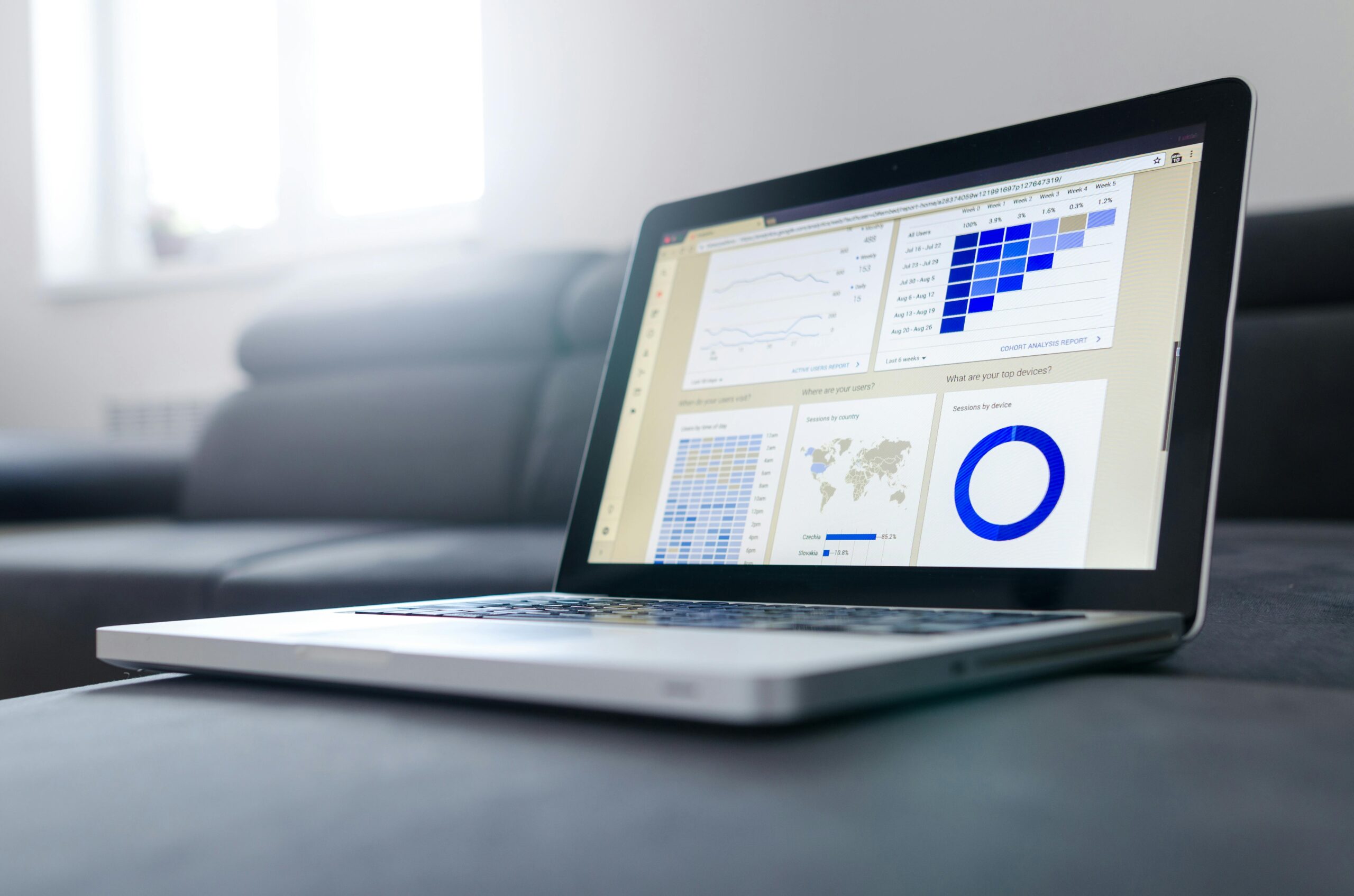
Heatmaps provide an intuitive visual language for understanding complex data relationships. Their color-coded matrices allow human eyes to process thousands of data points simultaneously, making pattern recognition nearly instantaneous. This capability becomes invaluable when monitoring data drift across multiple dimensions.
The power of heatmaps lies in their ability to compress multidimensional information into two-dimensional space. Time series data, correlation matrices, and feature distributions all become accessible through strategic color mapping. When drift occurs, these visualizations reveal anomalies as color deviations that immediately capture attention.
Key Advantages of Heatmap-Based Drift Detection
Traditional line charts and bar graphs struggle to represent multivariate drift effectively. Heatmaps overcome this limitation by encoding multiple variables simultaneously. A well-designed heatmap can display feature correlations, distribution shifts, and temporal patterns within a single view.
Color psychology plays a crucial role in drift detection effectiveness. Sequential color schemes work best for magnitude-based comparisons, while diverging palettes highlight deviations from baseline values. Strategic color selection ensures that even subtle drift patterns become visually prominent.
🎯 Essential Components of Drift-Aware Dashboards
Building dashboards that effectively communicate drift requires more than assembling visualizations. The architecture must support continuous monitoring, historical comparison, and threshold-based alerting. Each component serves a specific purpose in the drift detection workflow.
Real-time data streams demand responsive visualization frameworks. Dashboard refresh rates must balance system performance with information currency. Too frequent updates create visual noise; too infrequent refreshes risk missing critical drift events. Finding the optimal cadence depends on data velocity and business requirements.
Layering Information for Maximum Clarity
Effective dashboards employ hierarchical information design. Primary indicators occupy prominent positions, providing at-a-glance drift status. Secondary metrics offer context and detail for investigation. Tertiary information remains accessible but doesn’t clutter the primary view.
Interactive elements transform static dashboards into exploratory tools. Drill-down capabilities allow users to investigate drift signals at various granularities. Tooltips provide precise values without overwhelming the visual space. Filter controls enable focused analysis of specific data segments.
🔧 Technical Strategies for Enhanced Drift Visualization
Implementation of drift detection visualizations requires careful consideration of statistical methods and visual encoding techniques. The statistical foundation determines what constitutes meaningful drift, while visual encoding determines how that drift becomes perceptible to users.
Distribution-based drift detection compares current data distributions against reference baselines. Kolmogorov-Smirnov tests, Population Stability Index, and Jensen-Shannon divergence provide quantitative drift measures. These metrics must be translated into visual representations that non-technical stakeholders can understand.
Time-Windowing Approaches
Temporal aggregation significantly impacts drift detection sensitivity. Rolling windows smooth short-term fluctuations while preserving long-term trends. Fixed windows provide consistent comparison periods but may miss drift occurring at window boundaries. Hybrid approaches combine both strategies for comprehensive coverage.
Window size selection involves tradeoffs between sensitivity and stability. Shorter windows detect drift quickly but increase false positive rates. Longer windows reduce noise but delay drift identification. Adaptive windowing techniques adjust sizes based on data volatility and business context.
💡 Design Principles for Intuitive Drift Heatmaps
Visual design choices dramatically affect how quickly users recognize and interpret drift patterns. Color schemes, layout decisions, and annotation strategies all contribute to cognitive efficiency. Evidence-based design principles ensure visualizations communicate rather than confuse.
Perceptual uniformity in color scales prevents misleading visual impressions. Traditional rainbow color schemes create artificial boundaries that don’t exist in data. Perceptually uniform alternatives like viridis, plasma, and cividis ensure that color differences accurately represent data differences.
Spatial Organization Strategies
Heatmap arrangement significantly influences pattern recognition speed. Chronological organization works best for time-series drift detection, placing recent data consistently in the same location. Feature-based organization groups related variables together, facilitating multivariate drift assessment.
Cell size and aspect ratio affect both information density and readability. Tiny cells pack more data but become difficult to distinguish individually. Oversized cells waste screen space and reduce comparative context. Responsive designs adjust cell dimensions based on available display area.
📈 Advanced Techniques for Multi-Dimensional Drift
Real-world datasets rarely exhibit drift in isolation. Multiple features often shift simultaneously, creating complex interaction effects. Advanced visualization techniques reveal these multivariate drift patterns that simpler approaches miss.
Correlation heatmaps track relationship stability over time. When feature correlations drift, the internal structure of data has changed fundamentally. Animated heatmaps show correlation evolution dynamically, while small-multiples arrangements enable simultaneous comparison across time periods.
Dimensionality Reduction Integration
High-dimensional datasets require dimensionality reduction before effective visualization. Principal Component Analysis, t-SNE, and UMAP project complex data into 2D space suitable for heatmap representation. The projection itself can reveal drift when current data occupies different regions than historical data.
Embedding drift visualization requires careful baseline establishment. Reference distributions from training or calibration periods provide comparison anchors. Overlay techniques superimpose current data distributions onto historical baselines, making drift immediately apparent through color contrast.
⚡ Real-Time Drift Monitoring Systems
Static dashboards showing historical drift provide limited operational value. Modern systems require continuous monitoring with automated alerting when drift exceeds acceptable thresholds. The visualization layer must communicate both current status and trending direction.
Streaming data architectures enable true real-time drift detection. Processing frameworks like Apache Kafka and Apache Flink compute drift metrics continuously as new data arrives. Visualization layers consume these metrics through WebSocket connections, updating displays without page refreshes.
Alert Integration and Prioritization
Visual alerts must balance urgency with usability. Color-coded status indicators provide immediate drift severity assessment. Progressive disclosure reveals detailed information only when users request it. Alert fatigue mitigation requires intelligent threshold tuning to minimize false positives.
Contextual information transforms alerts from notifications into actionable intelligence. Highlighting which specific features exhibit drift focuses investigation efforts. Trend indicators show whether drift is accelerating, stabilizing, or reversing. Historical comparison reveals whether current drift levels are unprecedented or within normal variation ranges.
🎨 Color Strategy for Different Drift Types
Not all drift manifests identically in data. Gradual drift appears as slow color transitions across time. Sudden drift creates sharp color boundaries. Recurring drift shows periodic patterns. Each type benefits from tailored color strategies that enhance its distinctive visual signature.
Sequential schemes work best for gradual drift, showing smooth progressions from baseline to current state. Diverging schemes excel at highlighting bidirectional drift, where values move both above and below reference points. Categorical schemes distinguish discrete drift states when data exhibits mode-switching behavior.
Accessibility Considerations
Color-blind-friendly palettes ensure drift visualizations remain effective for all users. Approximately 8% of men and 0.5% of women have some form of color vision deficiency. Relying solely on color to convey information excludes these users from effective dashboard interaction.
Redundant encoding supplements color with additional visual channels. Pattern fills, icon overlays, and text annotations provide alternatives to color-only information. These enhancements benefit not just color-blind users but anyone viewing dashboards under suboptimal lighting conditions or on low-quality displays.
🔬 Statistical Rigor in Visual Drift Detection
Compelling visualizations without statistical foundation risk misleading users. Every visual drift indication should correspond to statistically significant changes in underlying data. Integrating statistical testing with visualization design creates trustworthy drift detection systems.
Confidence intervals and uncertainty visualization communicate the reliability of drift assessments. Shaded regions or error bars indicate the range of plausible drift magnitudes. This transparency prevents overconfident decision-making based on noisy data or small sample sizes.
Baseline Selection and Management
Reference baseline choice profoundly impacts what constitutes detectable drift. Static baselines compare current data against fixed historical periods. Dynamic baselines update regularly, detecting deviation from recent norms rather than distant history. Hybrid approaches maintain multiple baselines for different use cases.
Baseline staleness degrades detection accuracy over time. Scheduled recalibration prevents drift detection systems from becoming increasingly sensitive as legitimate data evolution occurs. Versioned baselines enable consistent historical analysis while accommodating necessary baseline updates.
🚀 Implementation Best Practices
Successful drift visualization projects require careful planning and iterative refinement. Initial implementations should focus on critical features and simple detection methods. Complexity can increase gradually as users develop fluency with the visualization language and identify specific needs.
User feedback loops are essential for dashboard optimization. Analytics tracking reveals which visualizations receive attention and which are ignored. A/B testing different design approaches identifies the most effective communication strategies for specific audiences and use cases.
Performance Optimization Techniques
Large-scale heatmaps can overwhelm both computational systems and human visual processing. Intelligent aggregation reduces data volume while preserving drift signals. Client-side rendering offloads computation from servers. Lazy loading defers non-visible visualization generation until needed.
Caching strategies balance freshness with responsiveness. Pre-computed heatmaps for common time ranges load instantly. Progressive refinement displays low-resolution previews while high-fidelity versions render. These techniques maintain interactivity even with massive datasets.
🌟 Future Directions in Drift Visualization
Artificial intelligence and machine learning are transforming drift detection from manual monitoring to automated intelligence. Neural networks learn normal data patterns and flag deviations without explicit programming. These capabilities will increasingly integrate into visualization systems, providing augmented analysis alongside human judgment.
Augmented reality and virtual reality present new possibilities for immersive drift exploration. Three-dimensional heatmaps encode additional information dimensions. Spatial arrangement leverages human spatial memory for faster pattern recognition. While currently experimental, these approaches may become mainstream as hardware costs decline.
Natural language generation will bridge the gap between visual patterns and verbal understanding. Systems that automatically describe observed drift in plain language make insights accessible to non-technical stakeholders. Combined with interactive visualizations, these narrations create comprehensive drift communication systems.
🎯 Maximizing Business Impact Through Better Drift Visualization
The ultimate measure of visualization effectiveness is business impact. Faster drift detection enables proactive responses to changing conditions. More accurate drift assessment reduces false alarms and wasted investigation time. Clearer communication ensures stakeholders understand implications and take appropriate action.
Organizations that master drift visualization gain competitive advantages. Marketing teams identify shifting customer preferences before competitors. Operations teams detect equipment degradation before failures occur. Risk management teams spot emerging threats while mitigation options remain viable.
Investment in visualization infrastructure pays dividends across the organization. Reusable dashboard components accelerate new project delivery. Standardized design patterns reduce training requirements. Centralized data quality monitoring prevents drift from corrupting downstream analyses and models.
The journey toward excellence in drift visualization is continuous. New data sources, evolving business requirements, and advancing technology create ongoing opportunities for improvement. Organizations that treat visualization as a core competency rather than an afterthought will lead their industries in data-driven decision-making.